
Contents
- Key takeaways
- How this comparison was built
- The six checks and how to run them
- Results
- The 10 studios compared
- What the results show
- How to choose a studio for AI search readiness: 3 questions
- What readiness has brought us so far
- Method and limitations
- Find out where your own site stands
- Frequently asked questions
Buyers now ask ChatGPT and Perplexity which studio to hire, and an assistant can only recommend what it is able to read. We ran six outside checks on the websites of ten design studios known in Ukraine, our own included, and publish the commands and the raw data so that every result can be verified. Four studios have an llms.txt, one blocks OpenAI's crawler, and one has an llms.txt that leads to pages an assistant cannot read.
The way companies choose a design studio is changing. Alongside Google, Clutch and referrals, decision-makers now put the question to ChatGPT, Perplexity and Claude, and in an Adobe survey 36% of respondents said they had discovered a new brand through ChatGPT. An assistant has one limitation that matters here: it can only recommend a company whose site it has managed to read.
This article checks how readable the websites of ten design studios are for AI assistants. It explains the six checks and how to run them on any site in a few minutes, gives the results in a table with the raw data attached, and ends with what to ask a studio before signing a contract. Figmatica is one of the ten and holds first place; the criteria and the method are ours, which is why every result here is reproducible.
Key takeaways
- Most studio websites are only partly readable for AI assistants. Four of ten have an llms.txt, three have FAQ markup, one has Markdown copies of its pages, and one blocks OpenAI's crawler outright.
- Product-focused studios are ahead of visual ones. Uitop, Goodface and Cieden, whose clients are SaaS and fintech companies, pass four or five checks. Obys, Vintage and Zgraya, known for motion and 3D, pass one or two, because a site built for the human eye leaves little text for a crawler.
- Five of the six fixes are cheap. llms.txt and crawler access take about an hour each; structured data a day or two; Markdown copies a few days, once. Only readability without JavaScript depends on how the site was built and is usually solved during a redesign.
- A studio's own website is its only unstaged portfolio in this topic. Before hiring anyone for AI visibility, run the six checks on the contractor's own domain.
How this comparison was built
We took nine design and web studios from among those whose names people in Ukraine search for most often, according to our own demand research from September 2026: Halo Lab, Qubstudio, Brander, Uitop, Cieden, Goodface, Obys, Vintage and Zgraya. Several of them work mainly with clients abroad; what they have in common is that the Ukrainian market knows them by name. The tenth studio is Figmatica.
The comparison measures one narrow thing: whether an AI assistant can find, read and quote the studio's own homepage. It does not measure the quality of anyone's work; that is for clients to judge, and the awards and reviews suggest the clients are satisfied. All six checks are made from the outside with plain HTTP requests, so anyone can repeat them. Since we are on the list ourselves, the commands are printed below and the raw results are published as a CSV file.
The six checks and how to run them
No special tools are needed: a browser and a terminal are enough. Replace site.com with any domain, including your own.
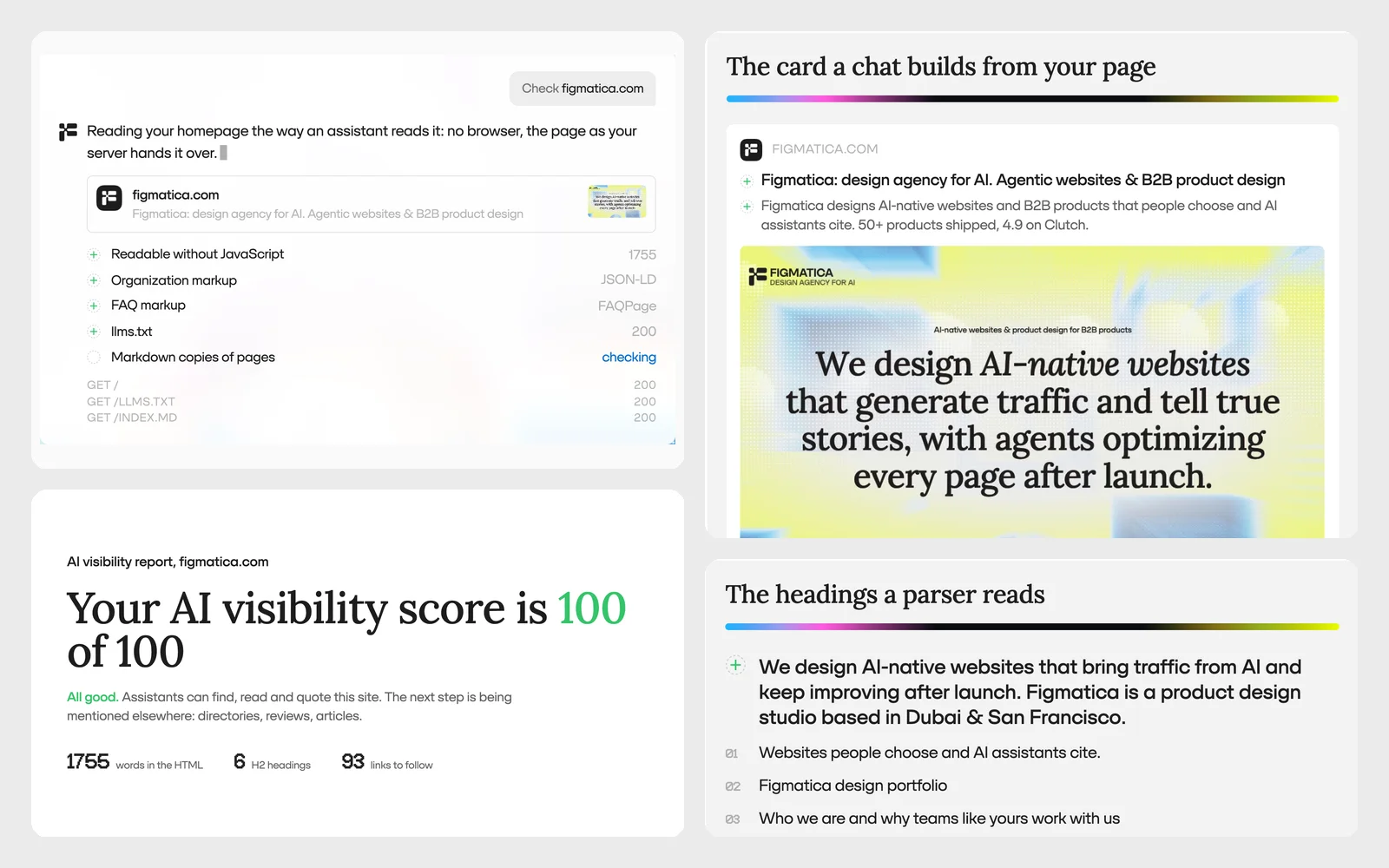
- 1. llms.txt. A text file at the root of the site that tells an assistant who the company is and where its important pages are. Check: open site.com/llms.txt. A 404 means the file does not exist. Effort to fix: about an hour.
- 2. Organization markup. Structured data that states in machine-readable form who the company is and which profiles on other sites belong to it. Check: view the page source and search for application/ld+json, then for Organization. Without it an assistant has to guess whether the site, the Clutch profile and the LinkedIn page are one company or three. Effort: about a day.
- 3. FAQ markup. Questions with short, complete answers, marked up so that an assistant can use them as they are. Check: search the source for FAQPage. Effort: a day or two, most of it spent on writing the answers.
- 4. Readable without JavaScript. Most AI crawlers do not execute scripts: they take the HTML the server returns and leave. Check: disable JavaScript in the browser and reload the page; what remains is what the crawler sees. We counted the words in the raw HTML of each homepage and treat more than 500 as readable. This is the only expensive item of the six, because it is determined by how the site is built.
- 5. Markdown copies of pages. The same page as clean text, without navigation and scripts. Check: add index.md to the homepage address, or .md to any page. An assistant reads such a copy faster and quotes it more accurately. This is still rare, and it is the check that separates first place from second in our table. Effort: a few days, once.
- 6. GPTBot access. Check: request the homepage with OpenAI's crawler name in the user agent. In a terminal: curl -s -o /dev/null -w "%{http_code}" -A "GPTBot/1.2" https://site.com/ . A 200 means the crawler is admitted; a 403 means it is blocked, usually by a firewall rule rather than by a decision. Effort: about an hour.
Results
Measured on 21 September 2026, homepages only, one request per check, from a computer in Ukraine. Sorted by checks passed; ties are ordered by words readable without JavaScript. The raw results are available as a CSV file.
| Studio | llms.txt | Organization | FAQ | Words without JS | Markdown | GPTBot | Passed |
|---|---|---|---|---|---|---|---|
| Figmatica | yes | yes | yes | 1,634 | yes | admitted | 6 of 6 |
| Uitop | yes | yes | yes | 1,661 | no | admitted | 5 of 6 |
| Goodface | yes | yes | yes | 1,408 | no | admitted | 5 of 6 |
| Cieden | no | yes | yes | 2,806 | no | admitted | 4 of 6 |
| Brander | no | yes | no | 3,111 | no | admitted | 3 of 6 |
| Halo Lab | no | yes | no | 1,431 | no | admitted | 3 of 6 |
| Obys | no | no | no | 843 | no | admitted | 2 of 6 |
| Zgraya | no | yes | no | 261 | no | admitted | 2 of 6 |
| Qubstudio | yes | no | no | 105 | no | admitted | 2 of 6 |
| Vintage | no | no | no | 802 | no | blocked, 403 | 1 of 6 |
The 10 studios compared
The table answers one question. Choosing a studio takes several more, so below each entry gives the studio's profile as stated on its own site, the state of that site in our checks, and the kind of project it is best suited to.
- 1. Figmatica. A design studio from Lviv: 50+ websites and products in three years, 4.9 on Clutch across 27 reviews, clients include WWF Ukraine, KFC Ukraine and the Ukrainian Startup Fund. Builds AI-native websites that assistants can read and that the client's own team runs, with AI agents drafting new pages. Own site: passes all six checks, 1,634 words without scripts; the only site on the list with Markdown copies. Best suited to an established business whose website has fallen behind the company. Less suited to a site conceived as an art object with 3D on every scroll; the studios at the foot of the table do that better. See AI-native websites.
- 2. Uitop. UI/UX and development for B2B SaaS, from discovery to MVP; publishes its hourly rate. Own site: llms.txt, Organization and FAQ markup, 1,661 words without scripts; only Markdown copies are missing. Best suited to a SaaS team that wants design and development from one contractor. Less suited to a marketing website as opposed to a product.
- 3. Goodface. Product design and engineering for growth-stage technology companies since 2016, with a focus on fintech; 100+ projects, Red Dot 2025. Own site: llms.txt with a clear positioning statement, both kinds of markup, 1,408 words. Best suited to a fintech company scaling product and brand together. Less suited to a small one-off website.
- 4. Cieden. UI/UX for B2B and AI applications, offices in Lviv, Warsaw and the US; 200+ projects, 4.9 on Clutch, clients include Apollo.io. Own site: 2,806 words readable without scripts, the second-highest figure on the list, and both kinds of markup; an llms.txt would put it in the top group. Best suited to complex SaaS interfaces where the workflow matters more than the showcase.
- 5. Brander. Kharkiv, on the market since 2009: e-commerce and marketplaces on Magento, mobile applications, web development and digital marketing; 300+ projects, clients include Kyivstar and WOG. Own site: the most text-rich homepage on the list at 3,111 words, with Organization markup; no llms.txt or FAQ markup. Best suited to a large online store where development and promotion come from one team.
- 6. Halo Lab. The largest team on the list: 120+ people, 500+ projects, design and development under one roof, Webflow partner. Own site: Organization markup and 1,431 words; no llms.txt and no FAQ markup, the two least expensive items in this comparison. Best suited to a company that needs one contractor for a large volume of work.
- 7. Qubstudio. Digital product design from Lviv and London with a strong banking record: Gulf Bank's application rose from 1.9 to 4.8 in the App Store after their work; Red Dot winner. Own site: an llms.txt that describes itself as optimised for LLM indexing, but only 105 words in the homepage HTML, so the pages the file points to are empty for a crawler. Best suited to fintech and banking products, where the track record carries more weight than any file.
- 8. Obys. Creative direction, identity and web for fashion, architecture and culture; projects for Porsche Taycan and Makhno. Own site: 843 words without scripts, a solid figure for a site this visual, and no structured data. Best suited to a brand that lives on impression and needs the site to be an art object.
- 9. Zgraya. Websites with 3D and complex animation for gaming and e-commerce; 7 Awwwards, 4.9 on Clutch. Own site: Organization markup is in place, but only 261 words in the HTML; the content lives in motion. Best suited to a launch that has to look unlike anything else.
- 10. Vintage. Thirteen years of award-winning websites from Kyiv, with offices in New York and London: 100+ awards, 31 of them Webby. Own site: 802 words, no structured data, and a 403 for GPTBot, the only blocked crawler in the comparison. Best suited to a flagship website meant to win attention and prizes.
What the results show
The first pattern is by client type. Studios that design products for SaaS, AI and fintech companies, Uitop, Goodface and Cieden, have largely done this work, because their clients ask for it. Studios known for visual work, Obys, Vintage and Zgraya, score lowest, and this is not negligence: a site built around motion and 3D is built for the human eye, and what wins it an Awwwards is precisely what a crawler without JavaScript cannot see. Until recently that trade-off had no cost. It now has one.
The second is that the file alone is not enough. Qubstudio's llms.txt states that the site is optimised for LLM indexing, while the homepage holds 105 words in its HTML and everything else is rendered by JavaScript. The file therefore directs an assistant to pages it cannot read. The order of work matters: text in the HTML first, then the files that describe it.
The third is that access can be lost by accident. Vintage answers GPTBot with a 403, most likely a firewall rule rather than a decision, and OpenAI's real crawler comes from different addresses than a laptop in Ukraine. From the outside, however, it looks like a closed door to the most used assistant in the world at a studio with 31 Webby awards. It is an hour's work to open it, and we will update the table when it happens.
On our own result: Figmatica passes all six because for several months this was the main work on our own site, and Markdown copies, the one check no one else passes, were built deliberately. Without that check we sit level with Uitop and Goodface, and on words without JavaScript we trail Brander and Cieden by a wide margin. Six months ago our site would have scored two. The table records who started earlier, not who is more capable.
How to choose a studio for AI search readiness: 3 questions
The checks above take ten minutes and tell you where a studio stands today. Three questions at the first meeting tell you whether it will build your site the same way.
- 1. Will the text of our pages be in the HTML the server sends? The answer should name a method: server-side rendering or static generation. "Google handles JavaScript" is an answer about a different reader.
- 2. Show us llms.txt and structured data on your own site. Opening the file takes ten seconds and settles the matter. In a topic this new, the contractor's own site is the only portfolio that cannot be staged.
- 3. How will we know that AI crawlers actually visit the site? Analytics scripts do not register crawlers, because crawlers do not run scripts. The correct answer involves counting requests on the server. "It will show in Google Analytics" means it has never been checked.
One more rule applies to any contractor, ourselves included: a studio that guarantees a mention in ChatGPT is promising something it does not control. A credible offer covers the work and the measurement, not the outcome of a model's answer.
What readiness has brought us so far
A full score in the table is a precondition, not a result, and it is fair to say what it has produced so far. In the four weeks before this article, visits to our site from AI assistants numbered zero. The site had only just launched, the files were in place and the crawlers were admitted; the assistants had not yet arrived.
Since 21 September our server records every visit by GPTBot, ClaudeBot, PerplexityBot and their counterparts, page by page, because no analytics script can. We will repeat this comparison every quarter, keep earlier results next to the new ones, and publish our own figures alongside. If the method works, it will be visible on our site first; if it does not, that will be reported as well.
Sites we designed, and what clients wrote about working with us on Clutch.


Method and limitations
One request per check, homepage only, 21 September 2026, from a computer in Ukraine. Structured data and word counts are taken from the raw HTML before any script runs. The GPTBot check used OpenAI's published user agent string rather than OpenAI's network, so a site that filters by IP address may answer the real crawler differently. Inner pages may be better or worse than the homepage. If you represent one of these studios and a result is out of date or unfair, write to hello@figmatica.com: we will rerun the check the same day, correct the table and note the change on this page.
Find out where your own site stands
The six checks apply to any company website, not only to studios. If your site was built more than two or three years ago, it most likely passes one or two of them, and five of the six fixes take days rather than months. Book a call and we will run the checks on your domain before the meeting and show on concepts what an AI-readable version of your site could look like.
Websites and products we shipped
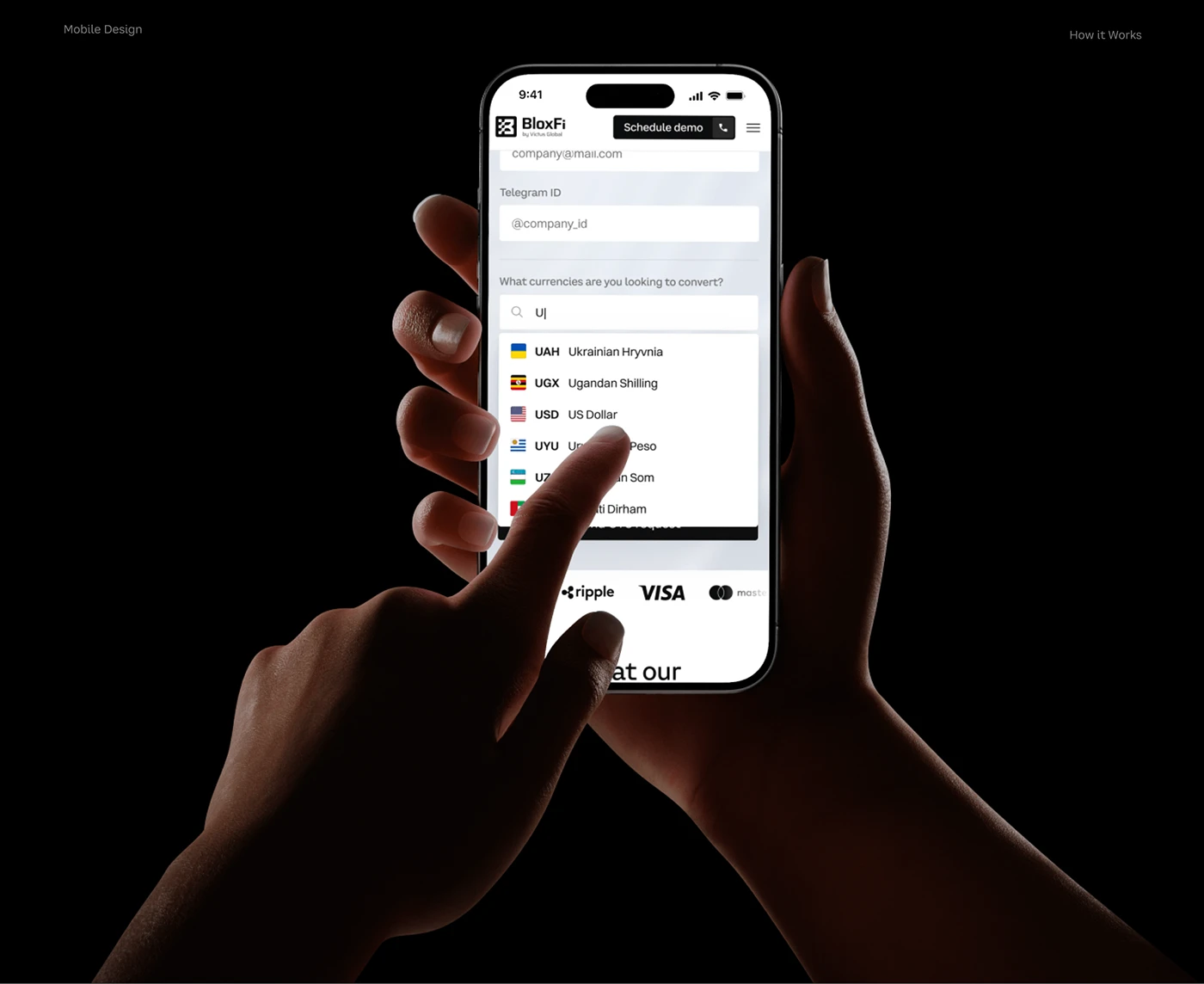 BloxFi80+ country pages from one template: how a fintech API went global
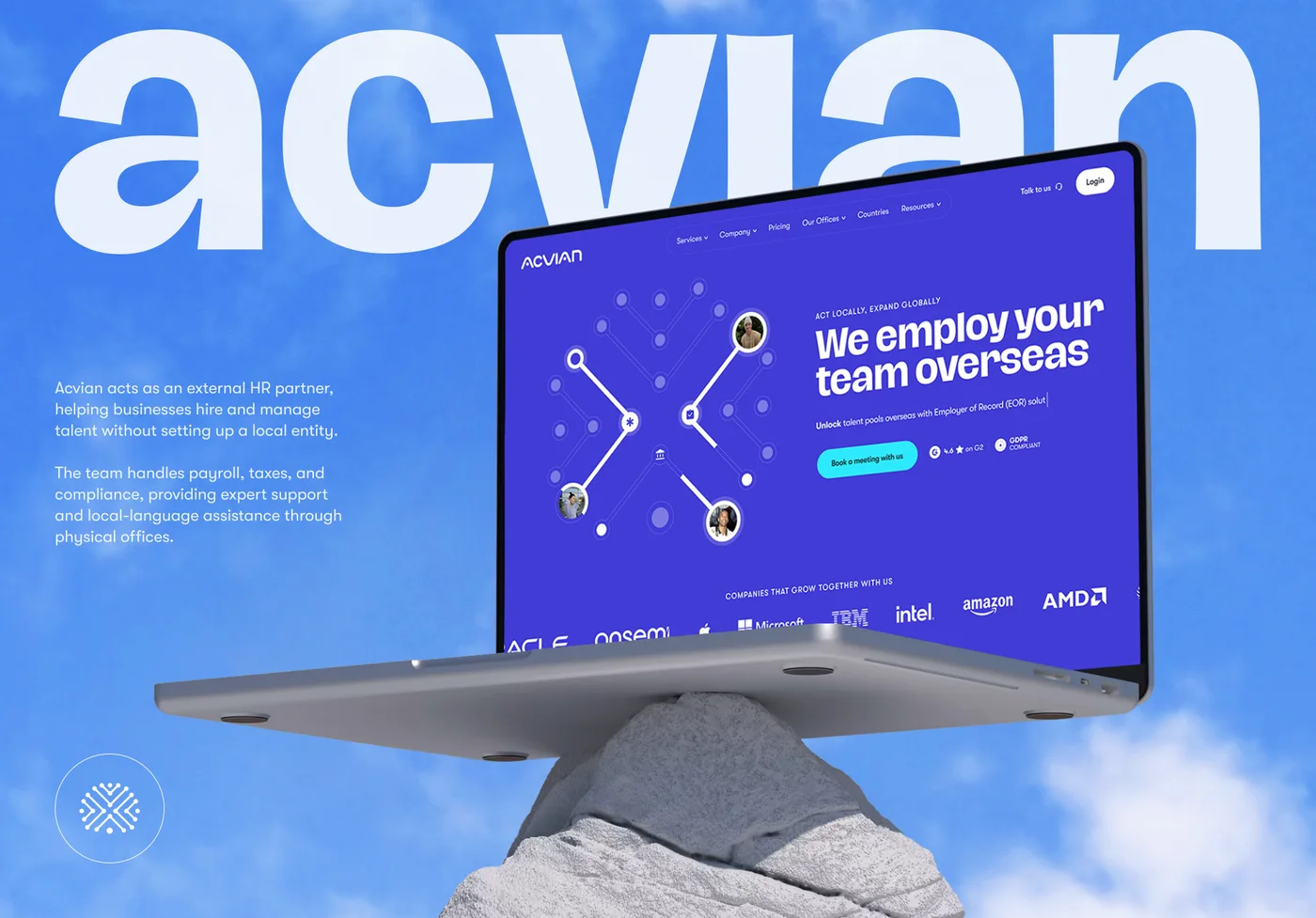 Acvian30+ pages in 60 days: a new Webflow site for a global HR partner
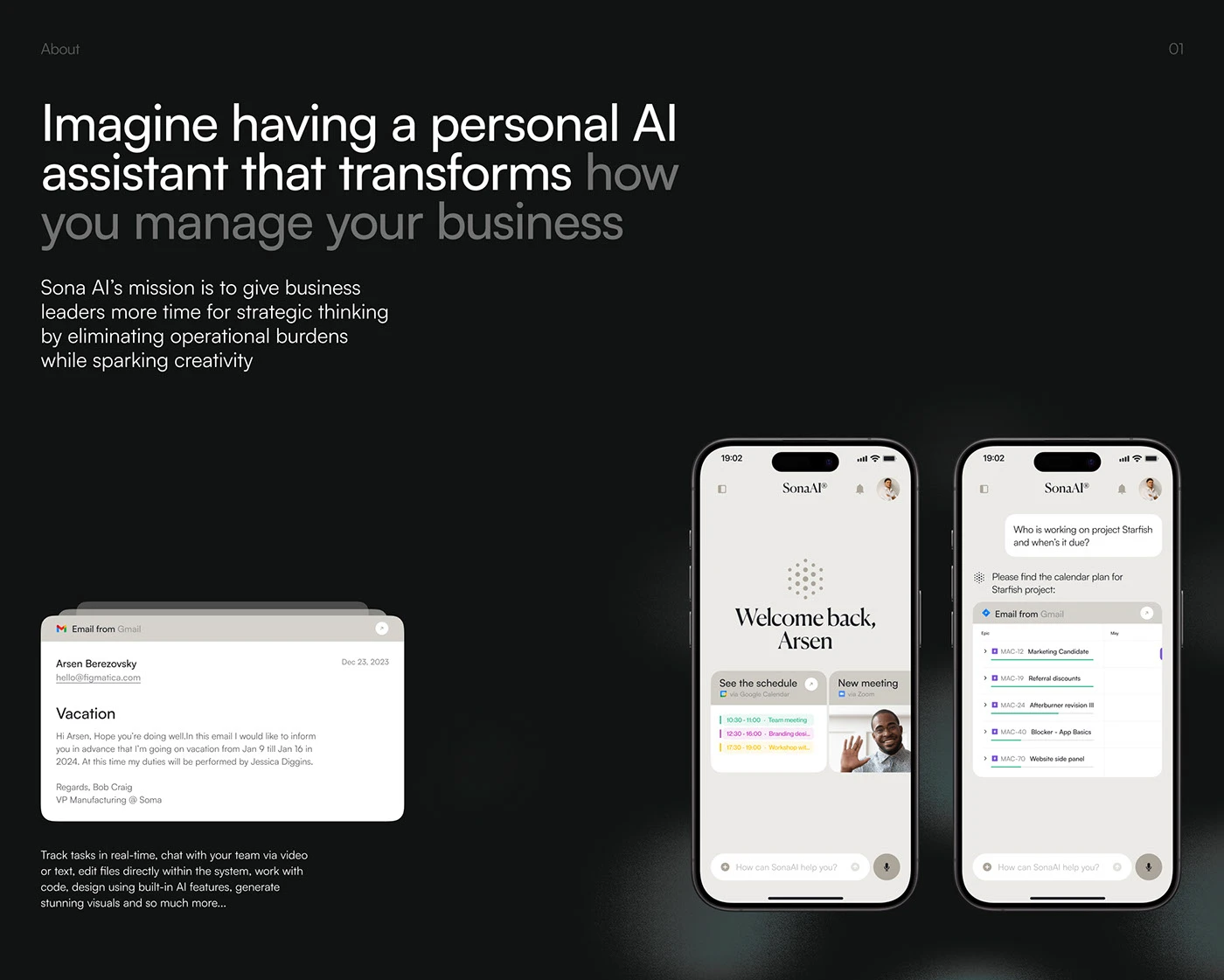 Sona AIThe AI assistant that brings order to chaos
Want the same for your site? 30 minutes, free.
Book a free call ↗